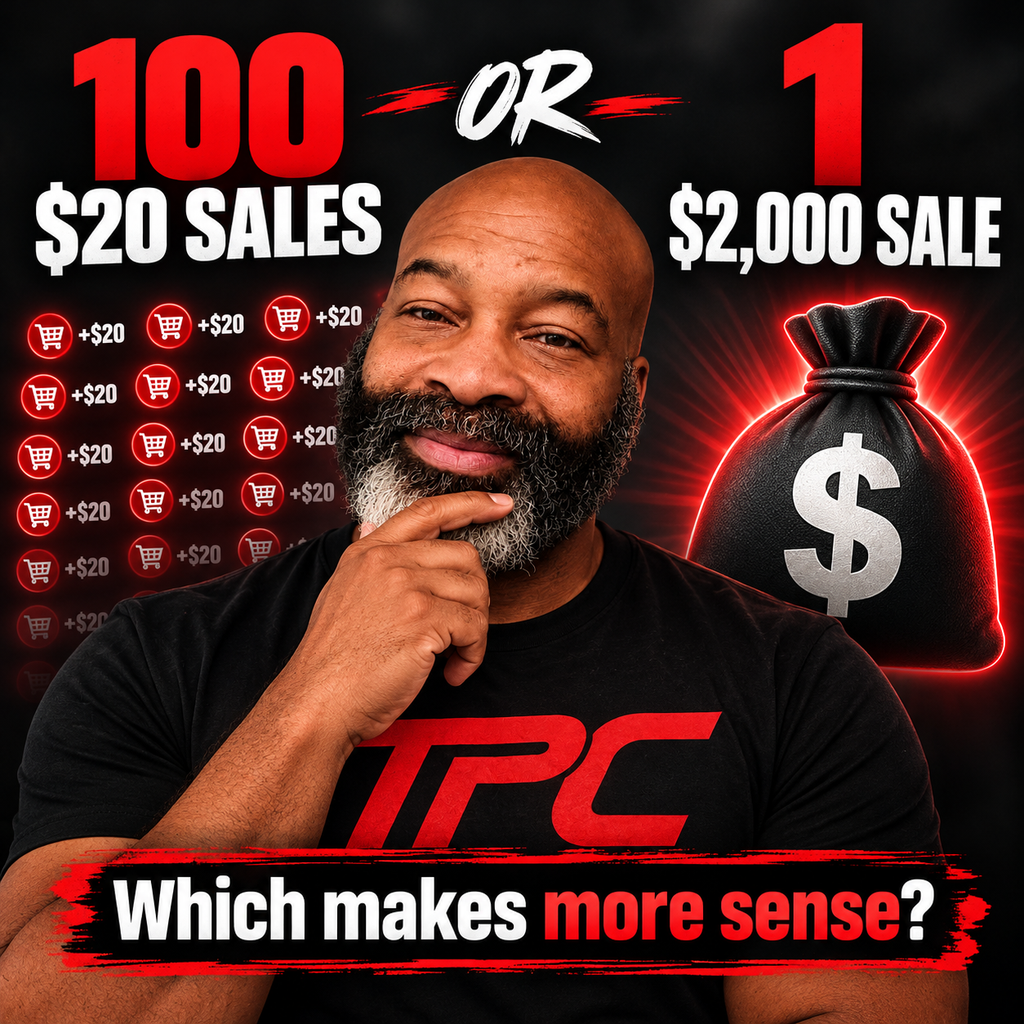
If you were building an online business and had two choices, which one would you prefer?
Make 100 sales at $20 each.
Or make one sale that pays $2,000.
Either way, you’ve earned $2,000 in gross commissions.
At first glance, the second option probably sounds more attractive.
Instead of finding 100 customers, you only need to find one.
But here’s something worth considering.
Just because two opportunities offer the same potential income doesn’t mean they require the same amount of work.
And understanding that difference can help you make better decisions when choosing an affiliate marketing opportunity.
Not All Commissions Are Created Equal
One of the first things people notice when researching affiliate marketing programs is the commission structure.
Some programs pay $5 or $10 per sale.
Others pay $50, $100, $500, or even $2,000.
Naturally, higher commissions get attention.
But commission size is only one part of the equation.
You also need to consider what you’re promoting, who your potential customers are, and how difficult it might be to generate a sale.
For example, selling a $20 digital product may require less financial commitment from the customer than selling a $2,000 product.
Someone might be comfortable spending $20 without giving it much thought.
But spending $2,000 usually requires more consideration.
They may want to research the company, understand exactly what they’re purchasing, and compare alternatives.
They might even need to discuss the purchase with their spouse.
So while a higher commission means fewer sales are needed to reach a particular income goal, those sales may require more effort to generate.
That’s why looking at commission amounts alone can be misleading.
The Math Is Simple, but the Marketing Isn’t
Let’s use a basic example.
Suppose you’re promoting two different affiliate products.
Product A pays a $20 commission.
Product B pays a $2,000 commission.
Your goal is to generate $2,000 in commissions.
With Product A, you need 100 sales.
With Product B, you need one.
That’s straightforward.
But now let’s introduce something else.
Conversion rates.
A conversion rate is simply the percentage of people who take a desired action, such as purchasing a product.
Let’s say 5% of qualified visitors purchase Product A.
That means approximately five sales for every 100 visitors.
At that rate, you would need around 2,000 qualified visitors to generate 100 sales.
Now imagine Product B converts at 0.1%.
That means approximately one sale for every 1,000 qualified visitors.
Under those hypothetical conditions, Product B could require fewer visitors to reach the same commission total.
But change those conversion rates, and the comparison changes.
These are examples, not typical or promised results.
The point is simple.
The number of sales you need matters, but so does how difficult those sales are to generate.
Why I Prefer Looking at the Work Involved
When evaluating an online business opportunity, I like to consider what I’ll actually be responsible for doing.
Am I creating the product?
Am I handling customer service?
Do I have to personally explain everything to potential customers?
Am I responsible for closing every sale?
How much time will I spend promoting the offer?
These questions matter, especially when you’re already working a full-time job.
Imagine promoting a product that pays $20 per sale.
You might need to generate a considerable number of purchases to reach your income goal.
But if the product is affordable, useful, and appeals to a broad audience, those sales might be easier to generate.
Now imagine promoting something that pays a much larger commission.
You might need fewer customers, but those customers may require more information before making a decision.
Neither model is automatically better.
The important thing is understanding the work involved in each.
High-Ticket Affiliate Marketing Isn’t Automatically Easier
High-ticket affiliate marketing generally involves promoting higher-priced products or services that offer larger commissions.
The attraction is obvious.
Instead of earning small amounts from individual purchases, you have the potential to earn larger commissions from fewer sales.
But there’s a common misunderstanding.
Some people assume that because they only need a few sales, the business must be easier.
That’s not necessarily true.
Higher-priced offers can involve longer decision-making periods, more questions, and greater hesitation from potential customers.
Trust becomes particularly important.
People want to know what they’re purchasing and whether the product or service provides enough value to justify the price.
That’s why effective high-ticket marketing requires more than repeatedly advertising large commission amounts.
You need to explain the offer clearly.
You need to attract people who are genuinely interested.
And you need to set realistic expectations.
A large commission doesn’t automatically make an opportunity worth promoting.
How Exitus Elite Fits Into This Conversation
One reason Exitus Elite appeals to me is its commission structure.
Depending on the membership level, Exitus Elite offers potential commissions ranging from $100 to $2,000.
That gives marketers an opportunity to pursue larger commissions without necessarily needing hundreds of individual sales to reach a particular financial goal.
Another feature I appreciate is the optional sales team.
With Exitus Elite, I can focus on introducing interested people to the business presentation.
The presentation explains the opportunity, and the sales team can assist with closing sales.
When I personally close a qualifying sale, the commission structure differs from when the sales team handles the closing process.
That distinction matters because sales assistance comes with a trade-off in the commission amount received.
However, for someone who works full-time and prefers focusing on marketing rather than personally handling every sales conversation, that arrangement may be appealing.
Of course, none of this guarantees income.
You still need interested prospects, and those prospects must decide whether the products and opportunity are right for them.
The larger potential commissions don’t eliminate the need to develop marketing skills.
Exitus Elite is simply one option among different affiliate marketing opportunities.
Don’t Forget About the Value of What You’re Selling
Here’s something that deserves more attention.
Would you purchase the product or service you’re promoting if there were no commission attached?
That’s a question worth asking.
If the only reason you’re interested in an opportunity is the amount of money you might earn, you could be overlooking something important.
Customers aren’t purchasing your commission.
They’re purchasing a product, service, or membership.
They need to understand what they’re receiving.
If you’re promoting digital training, for example, the training should provide meaningful information or skills that the customer values.
If you’re promoting software, it should serve a useful purpose.
And if you’re promoting a business opportunity, the costs, responsibilities, and risks should be explained clearly.
The commission might motivate you to promote the offer.
But the product’s value should help justify the customer’s decision.
Consider Your Expenses, Not Just Your Commissions
Another mistake beginners sometimes make is comparing gross commissions without considering business expenses.
Let’s say you generate $2,000 in commissions.
That doesn’t necessarily mean you’ve made $2,000 in profit.
You might have paid for advertising, website hosting, marketing tools, or other business expenses.
Those costs reduce what you actually keep.
For example, generating $2,000 in commissions while spending $800 on advertising leaves $1,200 before other expenses and taxes.
And if you spend money on advertising without generating sales, you could lose that investment.
That’s why I believe beginners should be cautious about spending heavily on marketing before understanding how their promotional process performs.
You don’t need to chase the largest possible commission while ignoring what it costs to generate a sale.
Which Commission Model Should You Choose?
There’s no universal answer.
Someone with a large audience interested in affordable products might do well promoting lower-ticket offers.
Another marketer might prefer higher-ticket products because they enjoy educating prospects and working with people considering larger purchases.
Someone else might combine different types of offers.
Your available time, marketing experience, audience, budget, and personal preferences should influence your decision.
And remember, the best-looking commission plan on paper isn’t necessarily the one that will produce the best results for you.
What matters is whether you can consistently attract interested people and promote something that provides genuine value.
Something to Think About
Would I rather make 100 sales paying $20 each or one sale paying $2,000?
If the amount of work, expenses, and likelihood of success were truly equal, I’d prefer the single $2,000 commission.
But in the real world, those factors usually aren’t identical.
That’s why choosing an affiliate marketing opportunity requires looking beyond the commission amount.
Understand the product.
Understand the customer.
Understand your responsibilities.
And understand what it might cost to generate results.
If you’re interested in learning about an online business opportunity offering potential commissions from $100 to $2,000, take a closer look at Exitus Elite.
Explore how the business presentation, marketing tools, and optional sales assistance work, then decide whether the opportunity fits your goals and circumstances.
Earnings are not guaranteed and results will vary.